“The first principle of recovery is empowerment of the survivor,” wrote psychiatrist and trauma expert Judith Lewis Herman in 1992. “She must be the author and arbiter of her own recovery.”
Three decades later, how many service providers embrace this?
Data suggests at least a third of Canadians seeking services — in health care, housing, justice, or other systems — will have histories of trauma. However, many service providers have yet to act on this knowledge and implement best practices to care for survivors appropriately.
To help address this gap, Shelter Movers Vancouver hosted "Diverse Perspectives: Empathy in Action," a webinar gathering diverse experts to discuss the practices of trauma-informed care across a variety of community services. We heard from Anniken Chadwick, a pelvic floor physiotherapist and founder of The Cheerful Pelvis, Amy S. FitzGerald, a public interest lawyer and the Interim Executive Director at the BC Society of Transition Houses, Lisa Rupert, the Vice President of Housing and Violence Prevention at Metro Vancouver YWCA, and Parmvir Singh Boparai, an Enhanced Family Counsellor for the refugee and immigrant specialized experience program (RISE) at DIVERSEcity Community Resources Society. Below, we summarize their insights and actionable strategies to create safer, more empathetic spaces for survivors of gender-based violence.

Trauma-informed approaches are practices that acknowledge the wide prevalence of violence and abuse and, therefore, trauma. By design, these approaches help minimize harm and retraumatization for survivors by creating an environment of safety, trust, and empowerment. Trauma-informed services are rooted in understanding the effects of trauma, recognizing the signs and symptoms, and responding with practices that support recovery.
In the context of housing services, Amy S. FitzGerald from BC Society of Transition Houses shared that investing in bright and airy spaces can distance survivors from previous experiences of feeling trapped. In healthcare settings, Anniken Chadwick of The Cheerful Pelvis emphasized the importance of taking the time to obtain embodied, informed consent. Across community service providers, cultural safety is a significant principle of trauma-informed practices. This approach emphasizes respecting cultural beliefs and practices so that survivors of all cultural identities can feel supported, safe, and in control of the care they receive.
Preventing harm requires a fundamental change in how Canadian systems service survivors. Care and service providers must reckon with the control they have over important aspects of a survivor’s life, such as when and how they access healthcare or housing. This power dynamic can mimic the control abusers exercised over survivors of gender-based violence.
Regardless of intent, service providers can retraumatize survivors. For example, they might show disbelief, minimize the survivor’s concerns, or project authority in their body language and tone. These failures mimic the control an abuser once held over the survivor and further damage the survivor’s trust in authority figures.
That makes trauma-informed care an ongoing, dynamic practice that requires continuous self-awareness and vigilance. For service providers, the emotional demands of working with trauma survivors are substantial and can result in burnout and compassion fatigue. Without the right support in place, these stressors will eventually undermine their ability to provide adequate care.
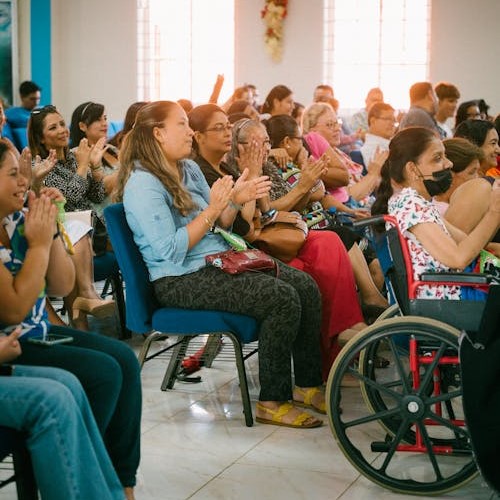
From housing services to community care and pelvic therapy, the expert panelists at the webinar shared hard-won insights on trauma-informed practices in their respective fields. Here are some key strategies for enacting the principles of trauma-informed care as loved ones, volunteers, or service providers:
Empowering survivors of gender-based violence requires a collective effort, ongoing learning, and a commitment to creating supportive spaces. By adopting these practices, we can build communities where survivors feel heard, respected, and empowered to thrive.
Missed our webinar? Watch the recording for "Diverse Perspectives: Empathy in Action," a Shelter Movers event about the principles of trauma-informed care.