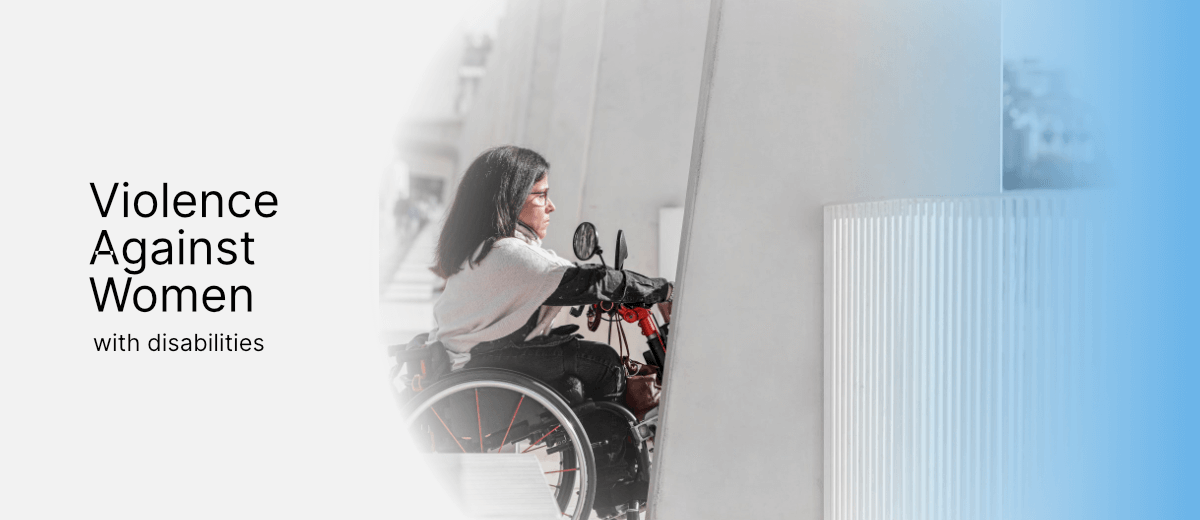
24% of all women in Canada live with a disability; however they experience nearly half of all violent victimization committed across the country. Women with disabilities are about twice as likely to face violent crime, multiple instances of violence, violence in their own home, sexual assault, and sexual abuse by an adult before the age of 15 than women without disabilities.
These statistics show the importance of employing an intersectional approach when analyzing the impacts of gender-based violence on women — because women of different identities will experience violence differently as well. This article will take a deeper look at how gender-based violence affects the lives of women with disabilities, and the ways violence manifests that are specific to this community.
Women with disabilities experience the same forms of abuse that many women experience, such as physical, sexual, psychological, as well as economic abuse. Some instances of abuse that uniquely affect women with disabilities include:
It is also important to recognize that women with disabilities may face violence at the hands of their own caregiver, whether that be their child, relative, nurse, or personal support worker. This is especially true for older women living with disabilities.
The hardships women with disabilities may encounter are not limited to inside the house. When she makes the decision to leave her abuser, a woman with disabilities faces a myriad of consequences. Only some of these impacts include a lack of a primary caregiver, development or exacerbation of mental and physical health challenges, threatened or actual loss of their children, as well as vulnerability to further violence due to unstable and unsafe housing, lack of resources, and increased isolation.Furthermore, women with disabilities may encounter the following barriers when seeking safe, affordable, and accessible housing:
Depending on how a woman identifies, she may face an even greater risk of violence or additional challenges. For example, new immigrant women may lose their immigration status should she leave her abuser, or could fall through the cracks between support services that focus on different groups. Women of colour and racialized women may face racism from medical professionals when they seek out health and social support services.Violence against women with disabilities who identify as lesbian, gay, or bisexual is over two times higher than violence against heterosexual women with disabilities. It is crucial to recognize how different forms of oppression can compound the difficulties women experience throughout the process of experiencing violence, as well as leaving violence.
If you would like to find out more about violence against women with disabilities, such as how violence itself can worsen or cause disability, as well as read about what improvements shelters can make to create accessible and inclusive spaces, please take a look at the Violence Against Women Learning Network’s issue on the topic.